Synthetic Leather: An Alternative to Animal Leather

Nowadays, material choices are not just about aesthetics and functionality; they’re also about smart economics and ethical responsibility.

One such material that exemplifies this multifaceted approach is synthetic leather.

As consumer awareness grows, businesses must adapt their offerings accordingly. Read on to understand why synthetic leather is becoming increasingly favoured right here in Malaysia and globally.

What is Synthetic Leather?

Synthetic leather, commonly referred to as faux, imitation, or artificial leather, is quickly becoming a preferred alternative to genuine animal leather.

Primarily comprised of Polyurethane (PU) and Polyvinyl Chloride (PVC), it replicates the look of genuine leather but offers broader versatility in colour and texture options.

To put it simply for those asking what is synthetic leather, it is a man-made fabric composed of a sturdy cloth base coated with a protective polymer layer.

This versatile material is gaining traction as a preferred choice across several industries, including:

  • Fashion and Footwear
  • Interior Design and Commercial Fit-outs (browse our upholstery fabrics)
  • Office and Home Furniture Upholstery
  • Bedding and Headboards
  • Automotive Seat Covers

So, what’s driving its popularity? The answer lies in the myriad advantages that it offers, making it an increasingly compelling choice.

Read more: Fabric for Sofa: Ultimate Guide to Selecting the Best Material

Understanding the Terms: What Synthetic Leather Means

In the commercial world, terminology matters. So, what does synthetic leather means when you see it on product specifications or supplier invoices?

Simply put, synthetic leather means that the fabric was manufactured entirely in a controlled factory environment without using any animal hides.

This precise manufacturing process allows brands to achieve exact color consistency across every roll, which is impossible to get with natural animal skins that vary in grain and thickness.

Furthermore, understanding the deeper synthetic leather meaning helps business owners and consumers appreciate how easy the material is to maintain.

Because the surface is sealed with a non-porous polymer topcoat, the true synthetic leather meaning boils down to everyday practicality: it resists water, blocks oil absorption, and can be sanitized quickly without damaging the finish.

Synthetic Leather vs Artificial Leather

You might often hear the terms faux leather, leatherette, and artificial leather used interchangeably.

In industrial manufacturing, artificial leather generally refers to heavy-duty, performance-tested composites engineered for demanding commercial settings.

For example, commercial grade artificial leather is specially treated to resist UV fading, mildew growth, and flame spread, making it ideal for hotel lobbies, restaurants, and medical clinics.

Whether spelled as artificial or artifical leather on trade orders, this versatile material ensures that your seating and products stay supple, attractive, and crack-resistant for years.

If you are trying to decide which specific coating suits your project best, take a look at our guide on PU vs PVC leather.

How Synthetic Leather is Manufactured

To fully appreciate the consistency and durability of engineered fabrics, it helps to understand the advanced roll-to-roll manufacturing process.

Unlike natural leather, which requires harvesting, salting, and chemical tanning of individual hides, synthetic materials are produced in continuous, highly uniform batches.

Step 1: Preparing the Base Cloth

The process begins by carefully preparing the backing textile, which serves as the structural foundation of the finished fabric.

Manufacturers select either woven polyester, sturdy cotton canvas, or flexible non-woven needle-punched fibers depending on the exact tensile strength required for the project.

For furniture upholstery that needs structural body, a heavier woven backing is chosen, whereas elastic clothing requires a lighter, stretchy backing.

Step 2: Applying the Polymer Coating

Once the base cloth is prepared, a precise layer of liquid polymer resin—either Polyurethane or Polyvinyl Chloride—is applied evenly across the moving fabric roll.

Specialized doctor blades ensure that the resin thickness remains accurate down to fractions of a millimeter across the entire width of the roll.

During this stage, custom color pigments, UV stabilizers, and flame-retardant additives are mixed directly into the liquid coating to achieve exact project specifications.

Step 3: Oven Curing and Embossing

After the polymer resin is applied, the coated fabric travels through precision-controlled heating ovens that cure and solidify the liquid coating into a tough, protective film.

Immediately upon exiting the curing oven while the surface is still slightly warm, the roll runs under heavy, textured embossing rollers.

These steel embossing cylinders imprint authentic leather grain patterns onto the surface, creating everything from fine, delicate calfskin grains to distinct, heavy pebble textures.

How to Choose the Right Grade of Artificial Leather

With so many options available on the market, selecting the ideal grade of artificial leather for your commercial or residential project requires paying attention to key physical specifications.

Understanding these specifications ensures that you get maximum longevity and performance from your investment.

1. Evaluate Thickness and Backing Weight

The thickness of synthetic leather generally ranges from 0.6mm for lightweight fashion goods up to 1.2mm or thicker for heavy-duty commercial upholstery.

For high-use seating in restaurants, hotel lobbies, or office environments, selecting a thicker material with a heavy woven backing ensures that the fabric won’t tear or stretch out of shape under constant load.

2. Check Abrasion and Rub Test Ratings

In commercial interior fit-outs, durability is measured using standardized abrasion testing methods known as the Martindale or Wyzenbeek rub tests.

These tests simulate everyday scuffing and friction by mechanically rubbing a testing pad against the fabric until wear becomes visible.

For commercial environments subject to heavy public foot traffic, always specify materials with high abrasion ratings—such as 50,000+ Martindale rubs—to guarantee years of scratch-free service.

3. Verify Safety and Compliance Standards

If your project involves commercial hospitality, healthcare, or public transit seating, verifying compliance with industry safety standards is essential.

High-tier artificial leather can be formulated with built-in anti-microbial treatments that prevent bacterial growth on shared seating surfaces.

Additionally, checking for fire-retardant certifications ensures that the material meets strict building codes and municipal safety regulations across Malaysia.

4 Essential Benefits of Synthetic Leather to Know

1. Higher Durability at a Lower Cost

One of the most appealing features of this material is its cost-effectiveness. By eliminating the need for labour-intensive processes and expensive raw materials, it significantly reduces production expenses.

But it’s not just about the money. It is also known for its durability and easy maintenance â€” qualities that are valuable in high-traffic settings such as homes and offices.

Furthermore, this material is engineered for longevity, all while remaining remarkably easy to clean and care for.

2. The Ethical Dimension: Animal Cruelty

Beyond its functional benefits, synthetic leather also addresses a critical ethical concern: animal cruelty.

Unlike genuine leather, the production of synthetic leather involves no harm to animals, serving as a vegan-friendly alternative.

As a result, businesses that choose this material can align their practices with humane, cruelty-free standards—an increasingly important factor for a discerning consumer base.

3. The Green Advantage: Lower Carbon Footprint

Another factor driving the growing popularity of synthetic leather is its relatively lower environmental impact, as it requires fewer resources to manufacture.

Moreover, as global industries shift toward more sustainable manufacturing practices, it often aligns with eco-friendly regulations in a controlled environment, which allows for:

  • Better waste management
  • Fewer CO2 emissions
  • Lower resource consumption
  • Decreased resource depletion

Hence, it holds a distinct advantage in terms of sustainability over its animal-based counterpart.

4. Making Environmentally Conscious Choices

Finally, for businesses focused on optimising both financial and environmental sustainability, synthetic leather presents a compelling value proposition.

Its inherent durability, coupled with a generally more cost-effective pricing structure, offers an attractive return on investment (ROI) for organisations.

Ease of maintenance is another plus; it is easier to care for than natural leather, which can be susceptible to water, oils, and UV light damage.

In addition, the concept of ‘Reduce, Reuse, Recycle’ can be aptly applied to synthetic leather products.

Thanks to their durability, these items are perfect for either second-hand use or recycling, thereby supporting responsible waste management practices.

Read more: Your Comprehensive Guide to Everything Tarpaulin

Frequently Asked Questions About Synthetic Leather

How long does synthetic leather last compared to animal leather?

When properly maintained and cleaned with mild soapy water, commercial-grade synthetic leather can easily last 5 to 10 years or more in high-traffic environments.

Does artificial leather peel over time?

High-quality artificial leather engineered with UV stabilizers and robust polymer resins resists peeling significantly better than cheap, low-grade alternatives when kept clean and away from harsh chemical solvents.

Is synthetic leather eco-friendly and safe for indoor use?

Yes, modern controlled manufacturing produces low-emission synthetic fabrics that require far fewer water resources and zero animal products compared to traditional hide tanning.

Choose Kintex as Your Reliable Synthetic Leather Supplier

Contemplating a switch to a more sustainable and economically viable alternative for your commercial needs? Look no further.

As Malaysia’s leading synthetic leather supplier, Kintex offers a diverse range of PU and PVC collections, specifically tailored to meet your unique requirements.

We aim to be your trusted partner, delivering high-quality, ethical, and sustainable materials for your projects.

This ensures that your customers enjoy the exceptional products they not only expect but also deserve.

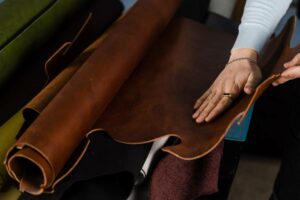
Contact Kintex today to request free sample swatches or get a wholesale quote for your business!